
Abraham O. Oghobase
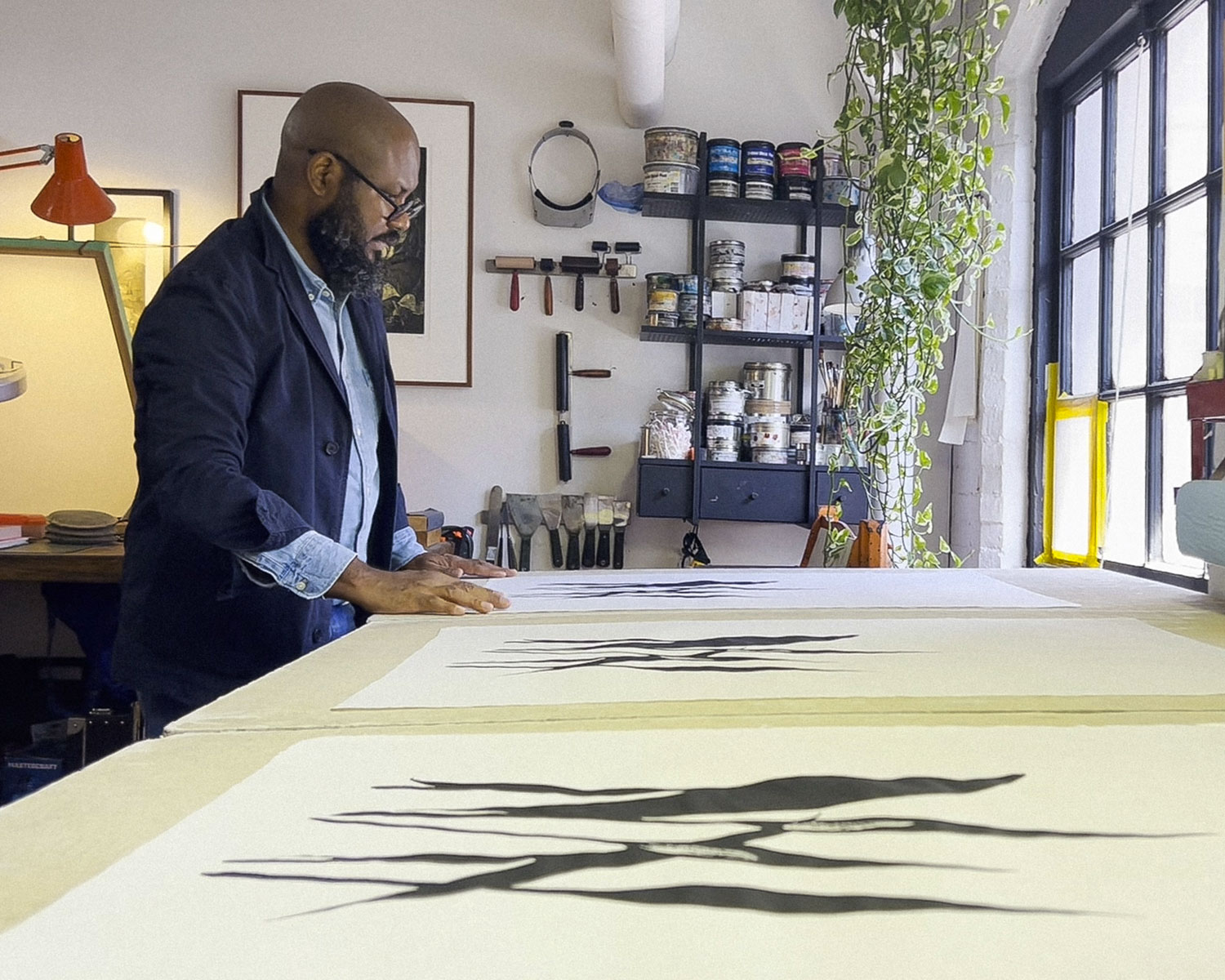
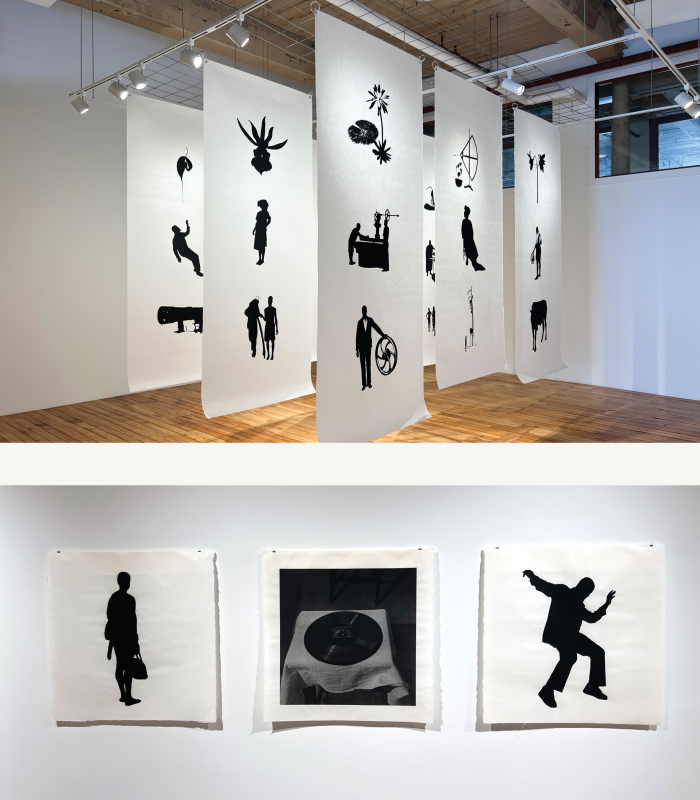
Abraham O. Oghobase has fostered a critically engaging photo-based artistic practice that questions the narratives and materials found in images and objects. His experience as a Smokestack Analog Print Residency participant marked the first occasion of his expanded explorations in an analog printmaking discipline – specifically silkscreen. Working collaboratively with Smokestack’s Analog Printmaker, Laine Groeneweg, Oghobase’s approach emphasized the bold & graphic potential of the silkscreen medium in juxtaposition with the delicate qualities of Japanese papers that carried the imagery. The resulting Notes to Self project shares an impressive collection, in both physical size and conceptual depth, that demonstrates the capacity of the medium.
-
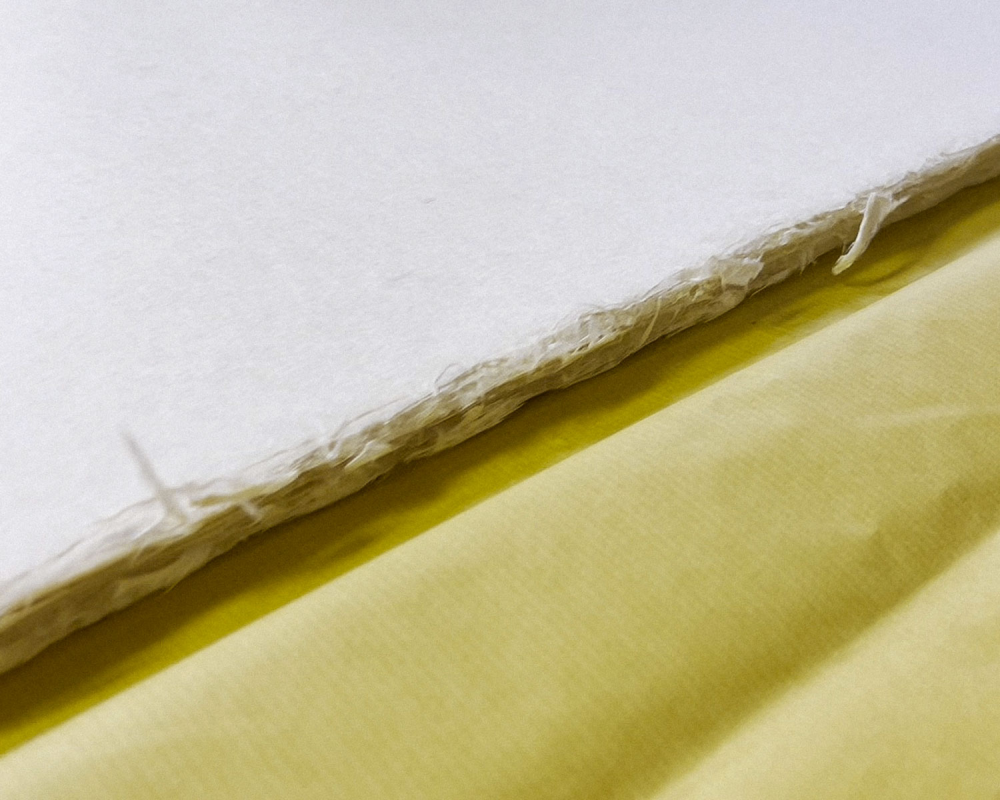
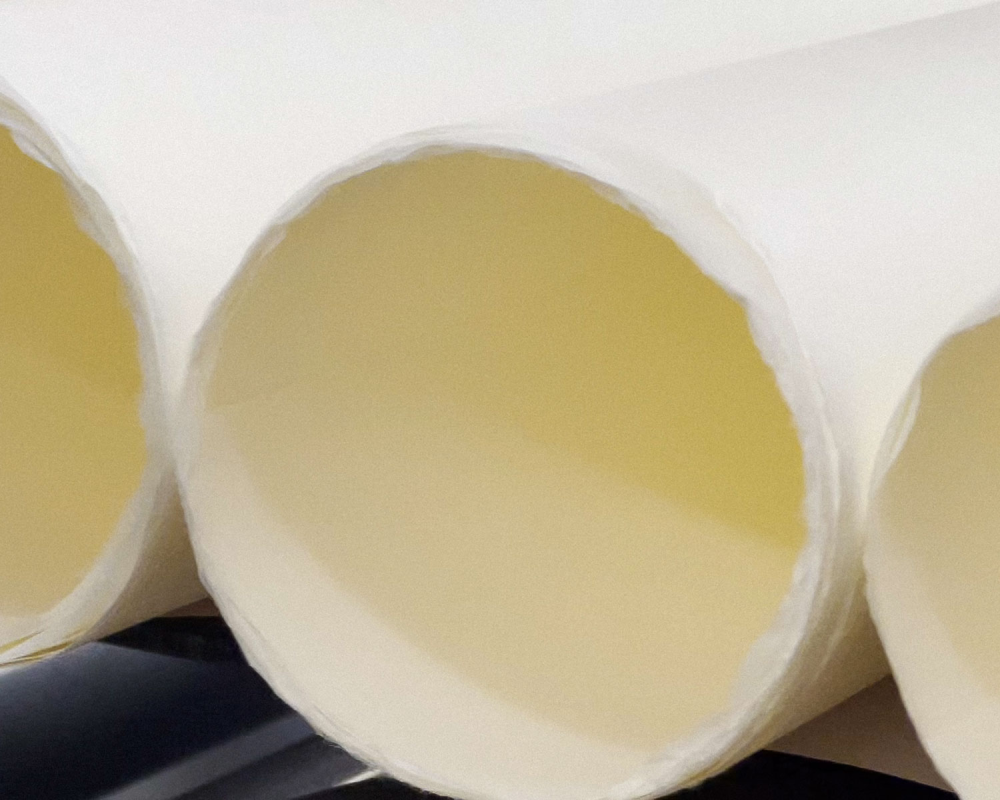
Abraham's project was as much about discovery of materials & process as it was a manifestation of image in print. His residency here at Smokestack represented a perfect moment to explore the possibilities of Japanese papers and they ways in which mood and feeling can be enhanced by the materials which we chose to print on. With this in mind, our journey began with a visit to our friends at the Japanese Paper Place in Toronto where we discovered an array of papers that could bring mood and feeling to the work we'd be doing. Pictured here is a beautiful stack of handmade Ogawa Kozo that we used throughout the project.
-
-
-
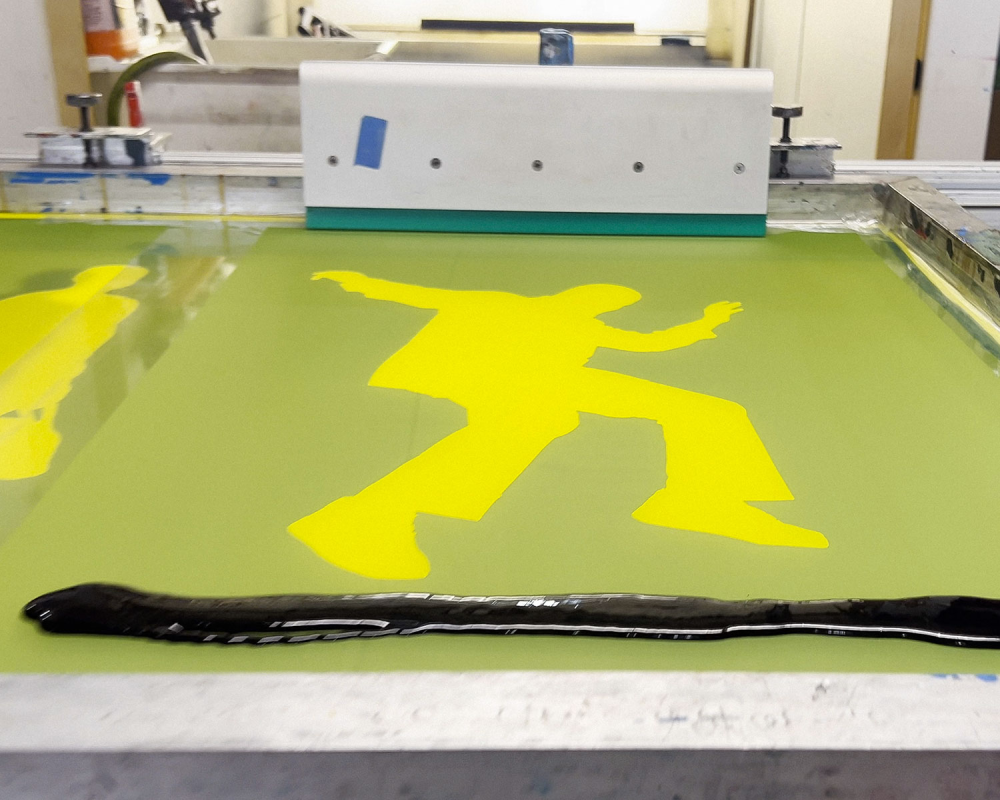
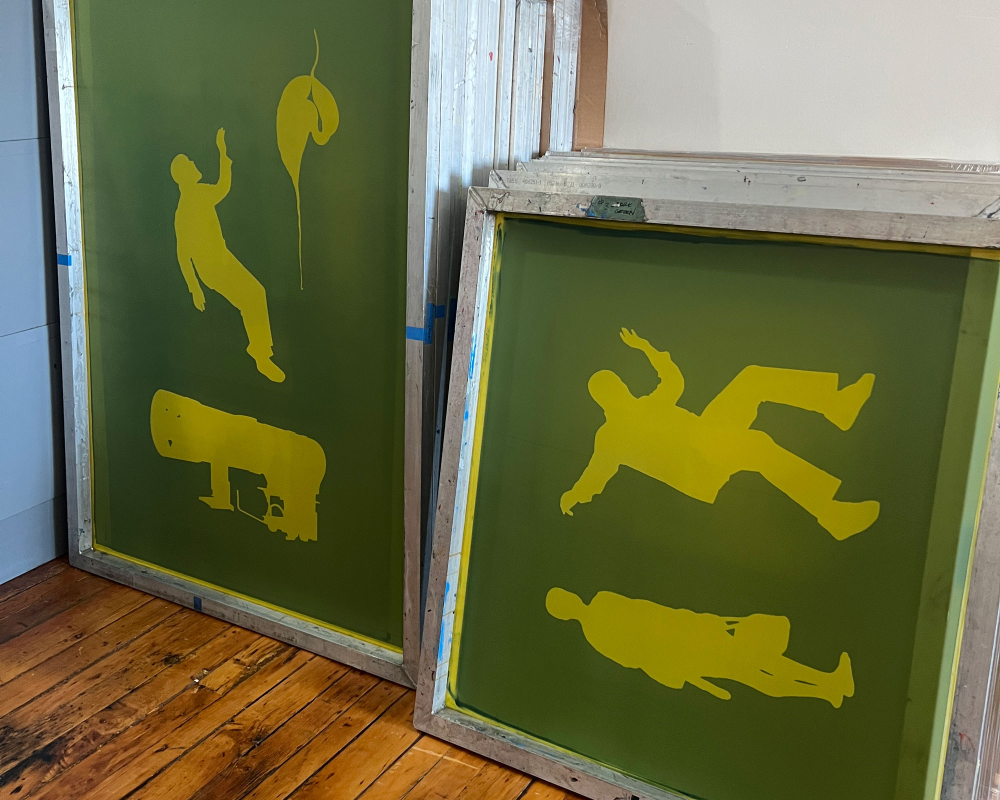
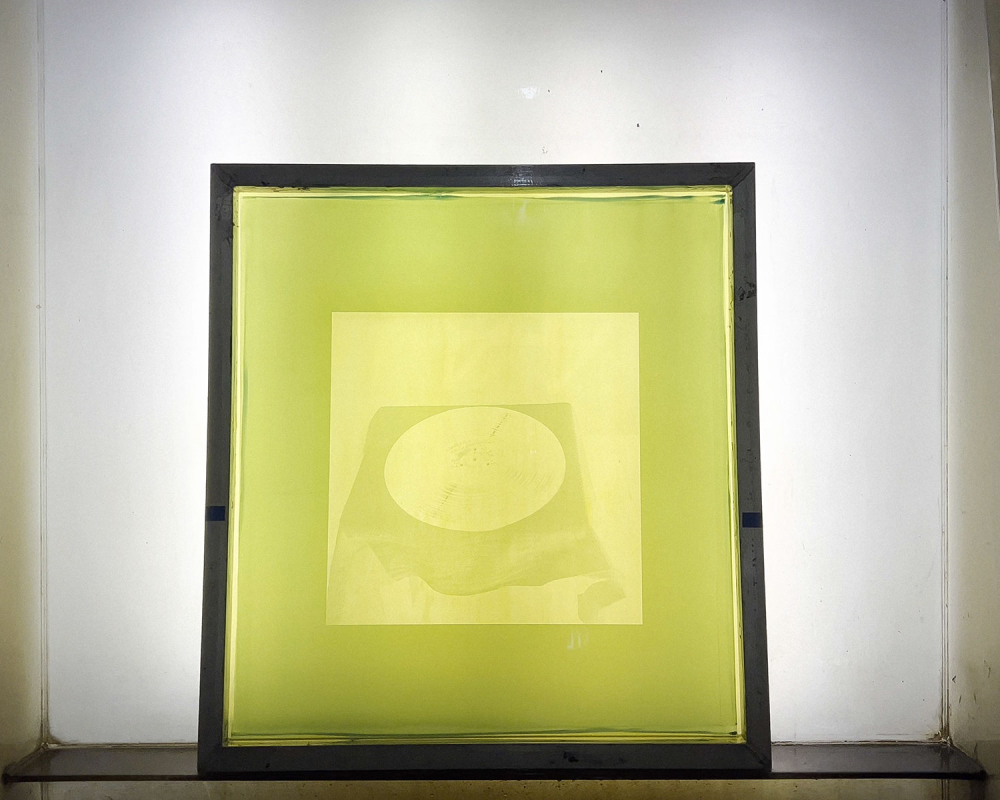
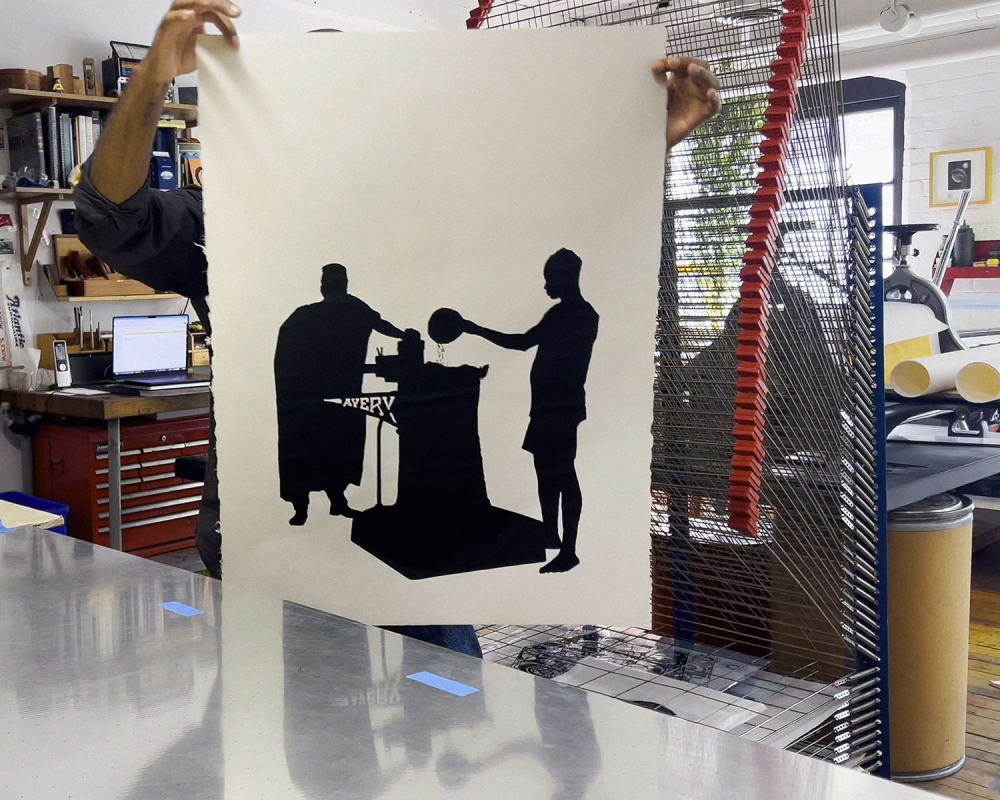
With such strong graphic nature of the silhouette images in Abraham's project, it was without question that screen printing would be the perfect process to develop the project with. The unique properties of the papers and the possibilities to traverse a variety of scales also bode well for using screen print. Having worked at Smokestack through the Digital studio in the past, Abraham often remarked about how exciting it would be to work in the analog space... this desire indeed came full circle during his residency.
-
-
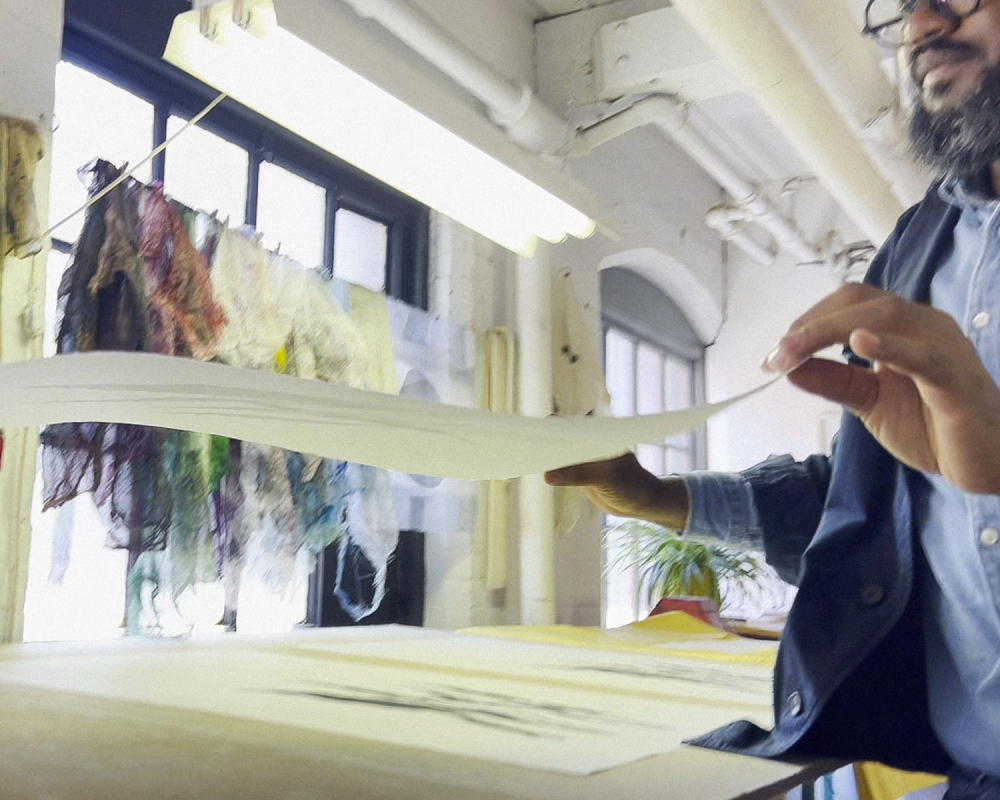
Japanese papers are made in a variety of ways and have distinct properties unique to each paper type. This requires intuition and care when working with these materials. While they may have their own aura and personality, one common fibre runs through all of them... they are an equal participant in the project and need to be followed just as much as they are lead.
-
-
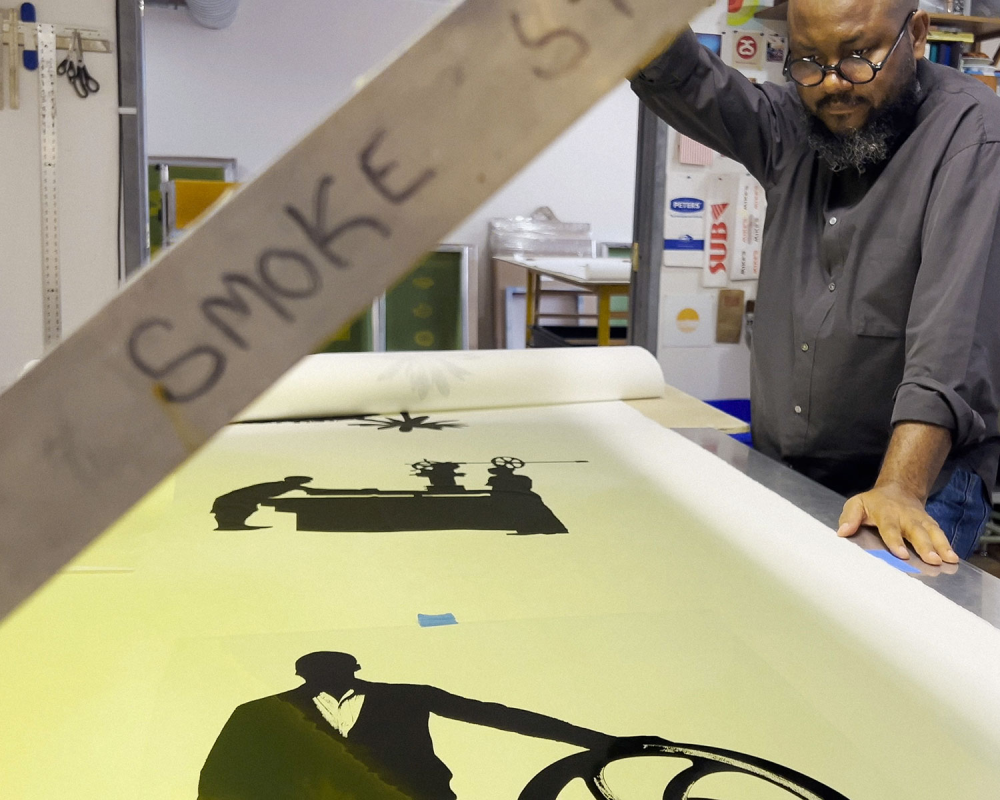
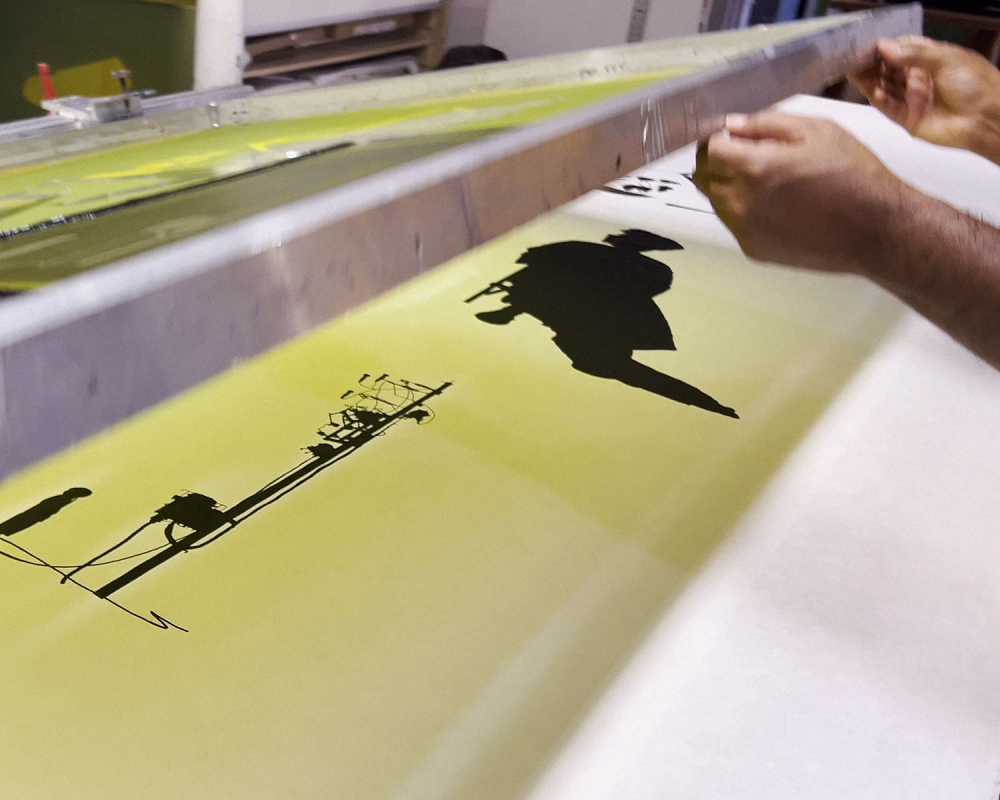
As we moved through the residency, we moved between working on single sheet / single image format to larger banner-like formats. This involved multiple separate applications of ink as well as careful handling and rigging of the paper to get the correct placements.
-
To ensure the correct placement of image element on the banners, Abraham used the films which we employed in the screen making process to give the correct placement on the larger paper. From this placement we could accurately set registration and construct the larger image layout accordingly.
-
-
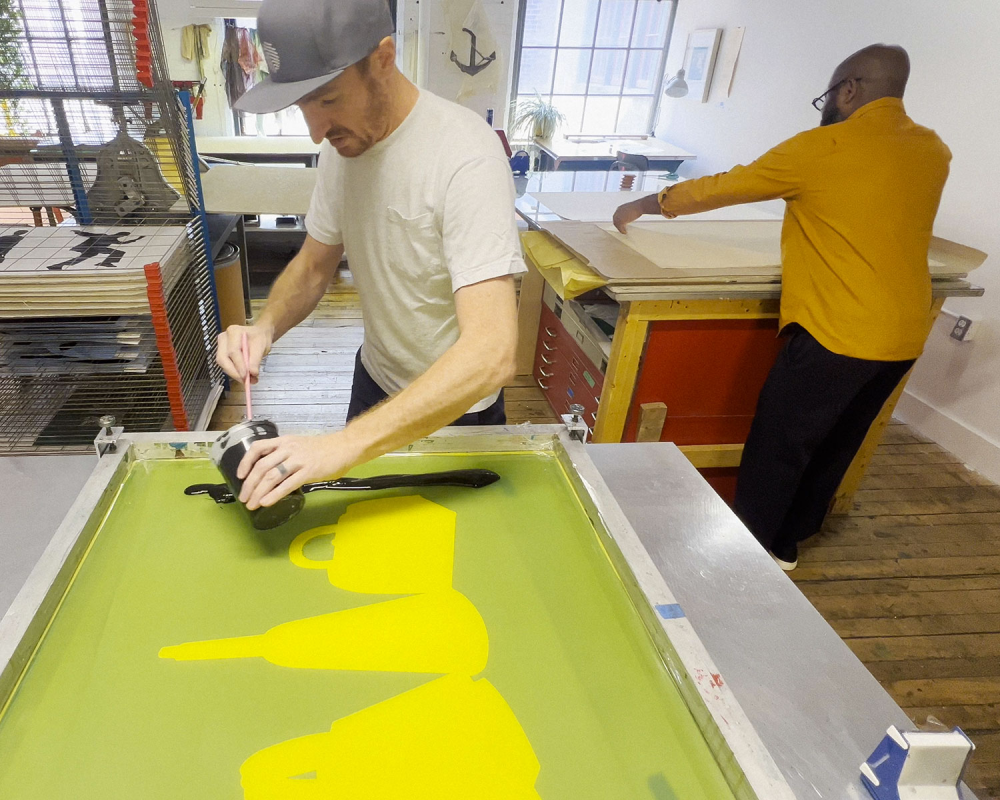
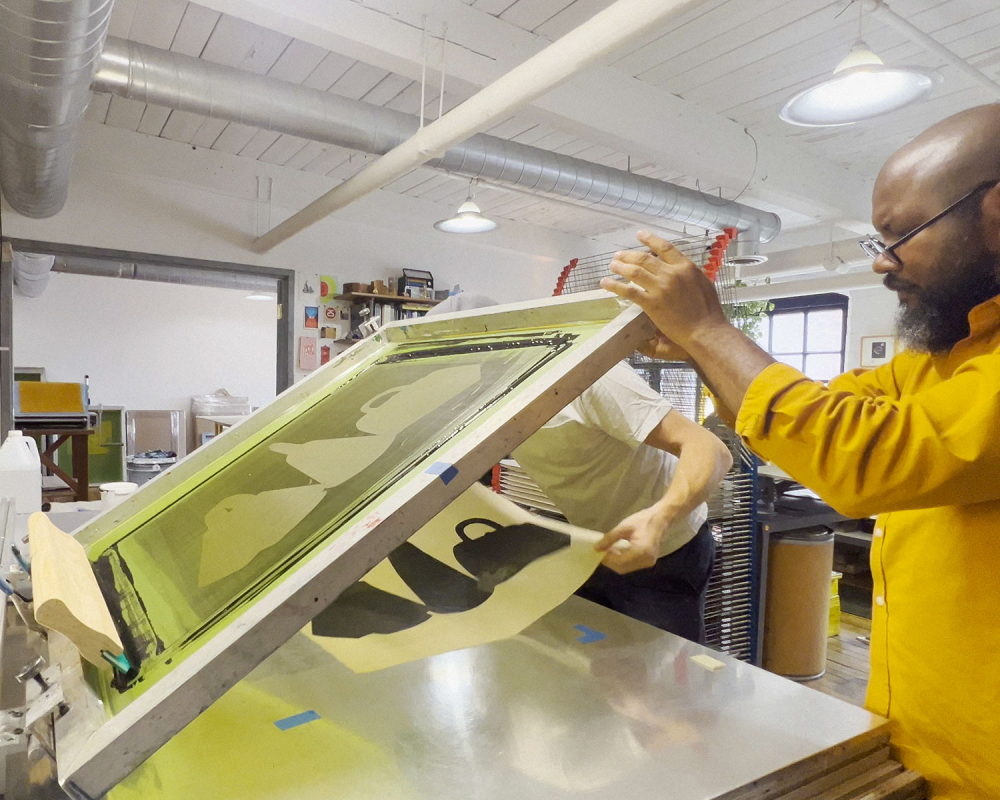
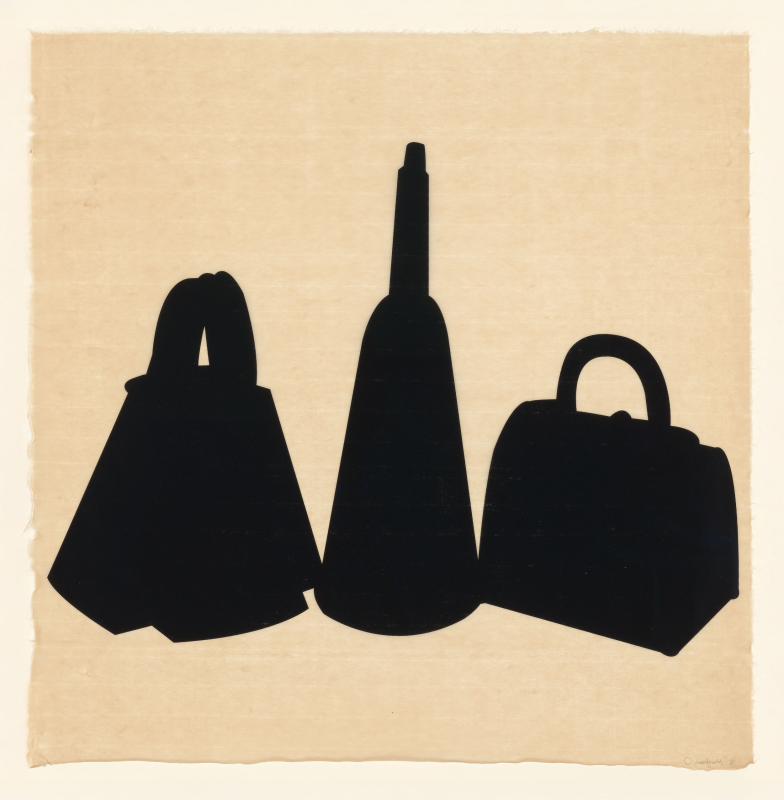
With all exhibitions here at Smokestack we produce an "Exhibition Edition". This is a limited edition print created to coincide with an artists' solo exhibition here at the Smokestack Gallery. Abraham continued his work in screen print and we created a small edition on a very delicate Yame Kozo Hadaura paper.
-
-
-
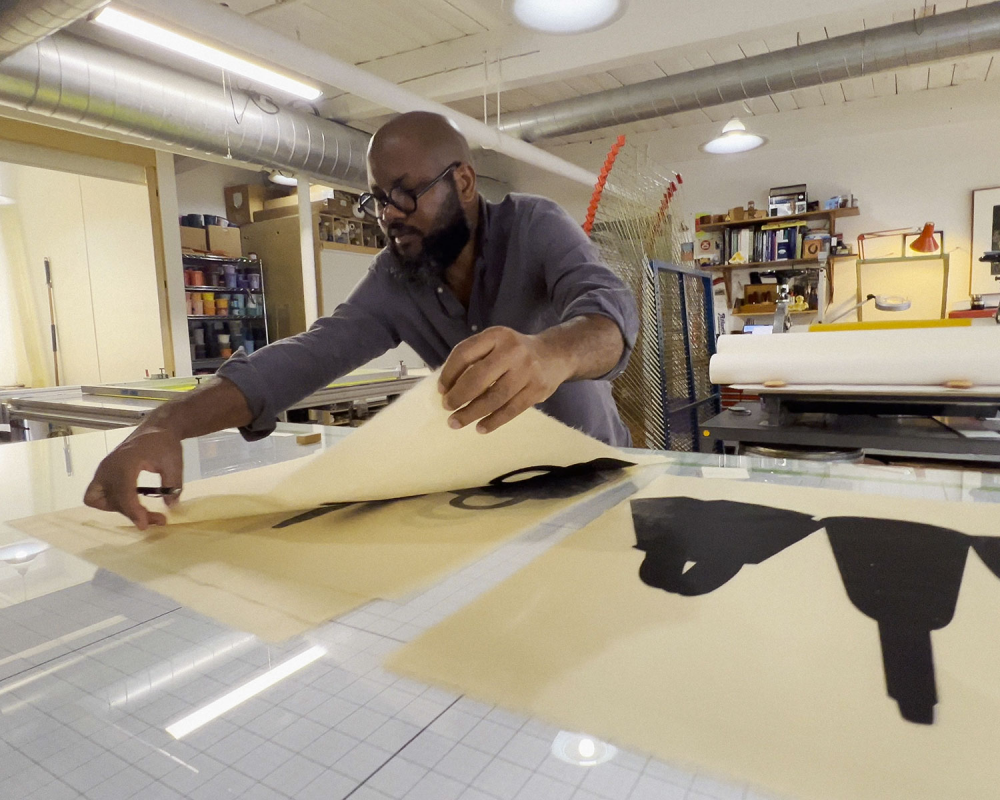
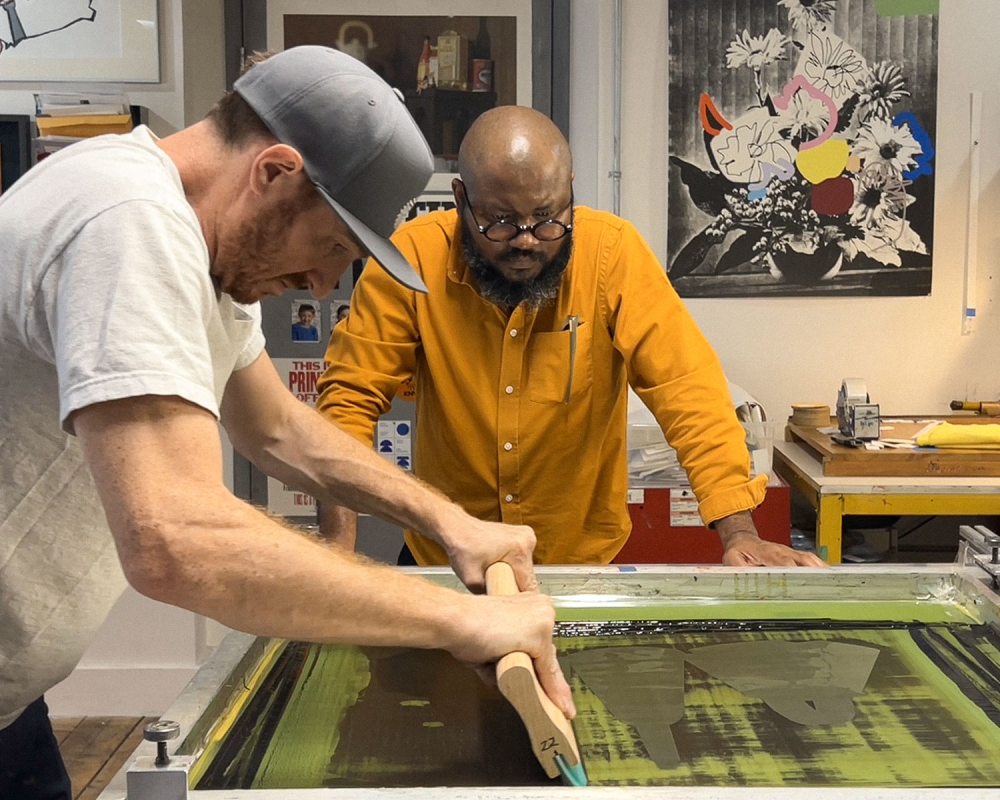
Yame Kozo Hadaura is an incredibly strong paper but very thin paper. It is often used in conservation applications and book repair. That said, as soon as the paper is subjected to wet ink and the tension of pulling a squeegee across the surface with the screen printing process, the paper is subjected to immediate stress and transforms into a very delicate state. Learning how to pull large amounts of ink while still retaining the integrity of the paper was a fun challenge!
-
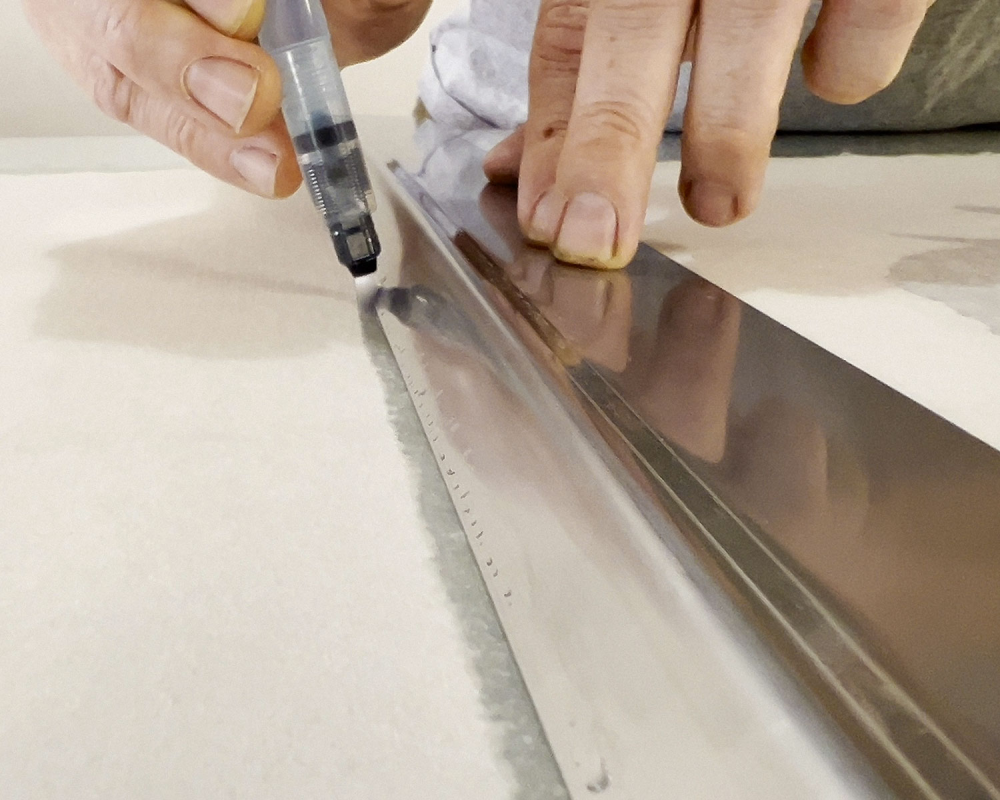
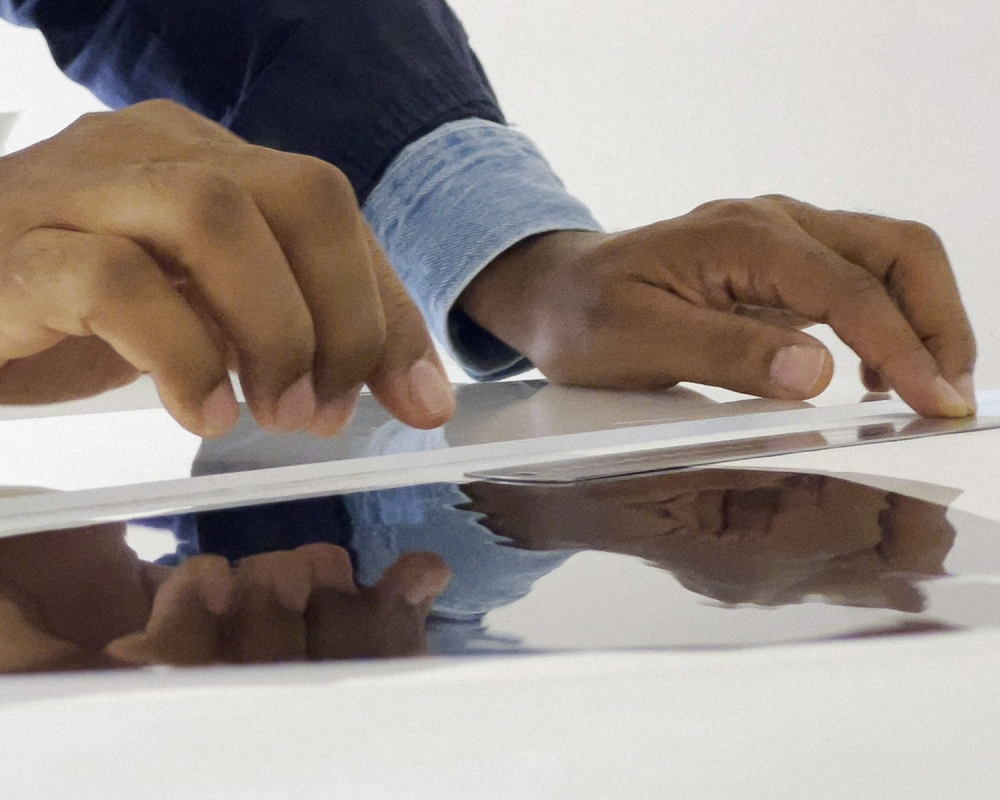
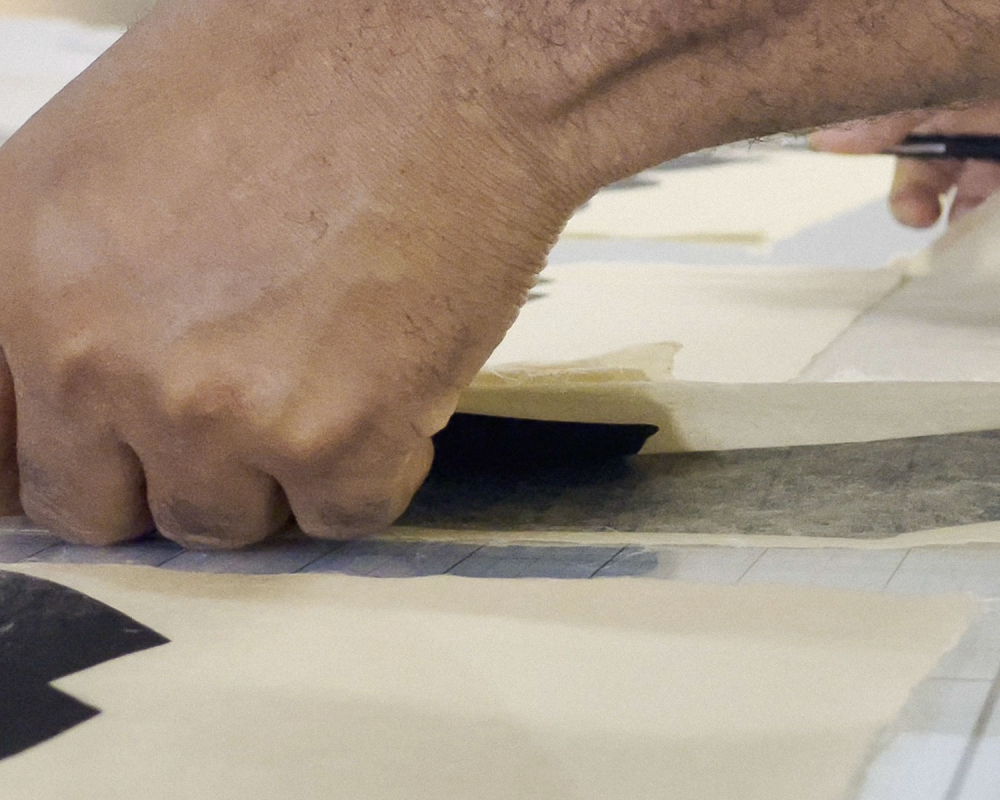
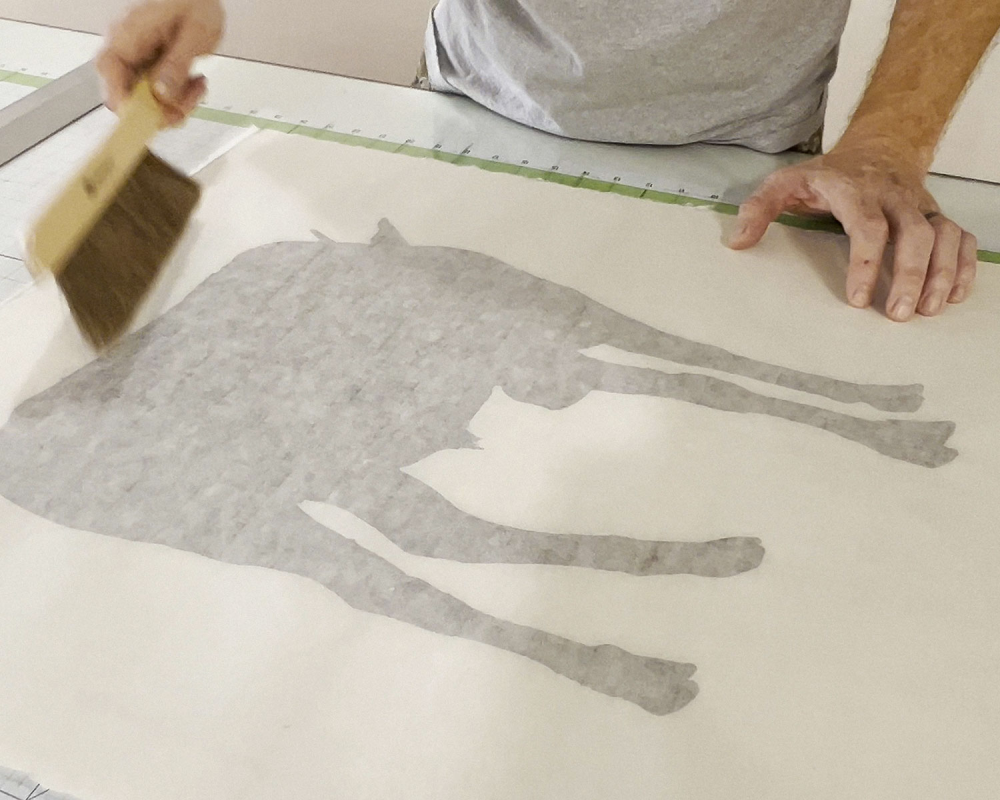
All of the papers we used in this project were Japanese papers, and in some cases we needed to trim the sheets to be a more suitable size. Rather than cutting with a knife or doing a standard tear using a tear bar, we chose do to a water tear. This process mimics the natural deckle edge of the paper and works with the direction and natural movement of the paper fibres. The strength of the fibres in many Japanese papers makes them harder to tear neatly and so the paper is lightly dampened along an edge using water and a brush.
-
-
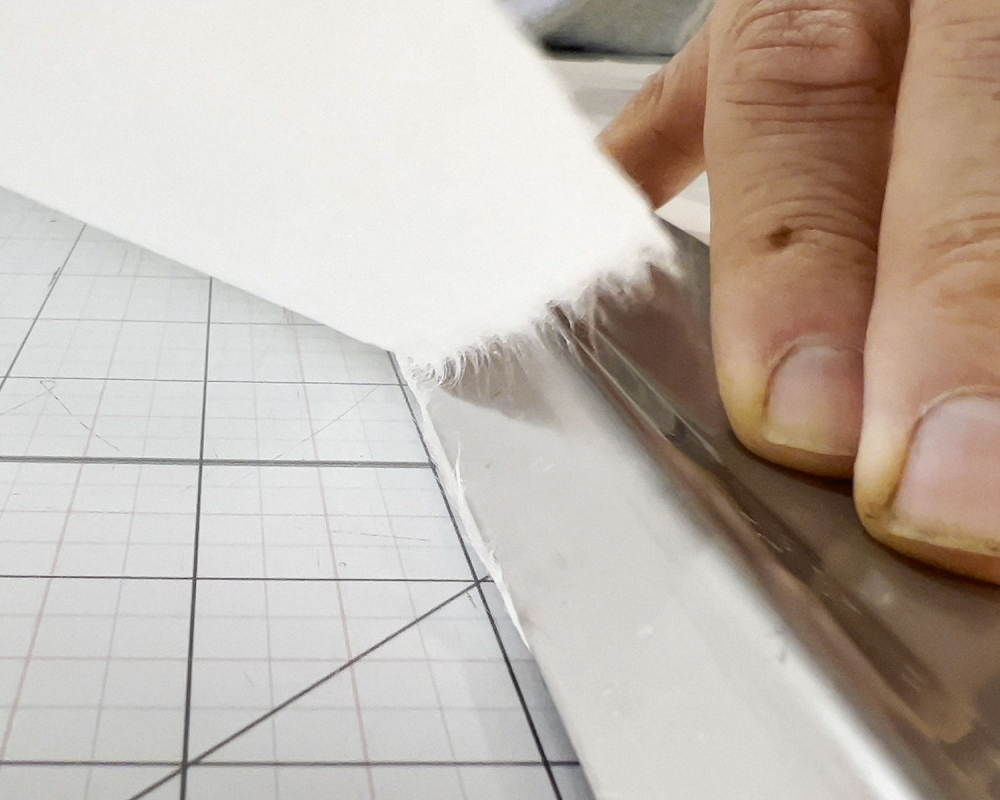
While the paper edge is wet the fibres become soft and susceptible to tearing. When torn along a straight edge, the fibres pull apart effortlessly and the end result is a beautiful natural fibre edge!
-
-
This project was made possible with support from: